Passer à l'action
Défendez les droits de Xavier Chungu:
Envoyez une lettre d'appel par poste ou e-mail.
Tweetez/postez dans les réseaux sociaux.
| Agir jusqu'au 24 janvier 2027 |
Modèles de lettre
_
Frais d'envoi par poste :
Europe: CHF 1.90
Autres pays: CHF 2.50
Suisse (copies à l'ambassade): courrier A: CHF 1.20 / courrier B: CHF 1.–
Envois par poste dans le monde: L'envoi de lettres par poste est possible dans presque tous les pays. Néanmoins, le service peut être suspendu temporairement. Nous essayons de mettre à jour les infos. Pour tenir compte des éventuelles limitations en vigueur, veuillez également consulter les infos de la Poste suisse.
_
E-mails:
- Signature: Veuillez ajouter votre nom (ou vos initiales) à la fin du message.
- Modifiez l'objet: si de nombreux courriels portant le même objet arrivent dans la boîte de réception en peu de temps, ils finiront directement dans le «spam»!
Pour éviter cela, nous vous recommandons vivement de modifier ou d'ajuster légèrement l'objet de votre courriel. - Vous pouvez également adapter le message et/ou mettre p.ex. en évidence les revendications et le nom.
- En cas d'échec de l'envoi: remplacez la virgule (,) entre les adresses e-mail par un point-virgule (;) ou n'utilisez qu'une seule adresse par champ.
_
Réseaux sociaux:
Infos, suggestions et adresses sous GUIDE RÉSEAUX SOCIAUX
_
Pour plus d'informations sur la participation aux Actions urgentes, cliquez ici.
Vous pouvez également nous contacter
Partagez la campagne avec vos amis.
Adresses
Directeur de l’action publique:
Director of Public Prosecutions
Mr Gilbert Phiri
National Prosecution Authority
Plot BLX 29B, Independence Avenue
Lusaka
ZAMBIA
E-mail: ca@npa.gov.zm
Procureur général:
Mr. Mulilo Dimas Kabesha, SC
Attorney-General
New Kent Building
Independence Avenue
P.O. Box 50106
Lusaka
Zambia
E-mail: attorney.general@moj.gov.zm
Copies à
Ambassade de la République de Zambie
Rue de Vermont 37-39
1202 Genève
E-mail: geneva@grz.gov.zm
Agir sur les réseaux sociaux
Twitter: @NPAZambia
Facebook: The National Prosecution Authority of Zambia
Graphique pour les réseaux sociaux à télécharger/utiliser:
Free Xavier Chungu!
Hashtags:
#FreeXavierChungu
#FreedomOfExpression
#XavierChungu
#RightToLiberty
Suggested social media messages:
We call on the Zambian authorities to immediately and unconditionally release Xavier Chungu if he is detained solely for exercising his right to freedom of expression, and to drop all related charges. #FreeXavierChungu #FreedomOfExpression [Insert Link to UA]
Freedom of expression is protected under the African Charter and the ICCPR. Zambia must respect, protect and uphold this right and ensure that no one is detained or prosecuted for expressing their views. #FreedomOfExpression #FreeXavierChungu [Insert Link to UA]
Claims of national security must never be used as a pretext to silence expression. Any restriction on freedom of expression must be lawful, and strictly necessary and proportionate to achieving a legitimate aim. #FreedomOfExpression #FreeXavierChungu [Insert Link to UA]
Claims of national security cannot be used to justify unnecessary restrictions on human rights. Any limitation on liberty or freedom of expression must be lawful, and strictly necessary and proportionate to achieving a legitimate aim. #XavierChungu #RightToLiberty [Insert Link to UA]
Plus d'info
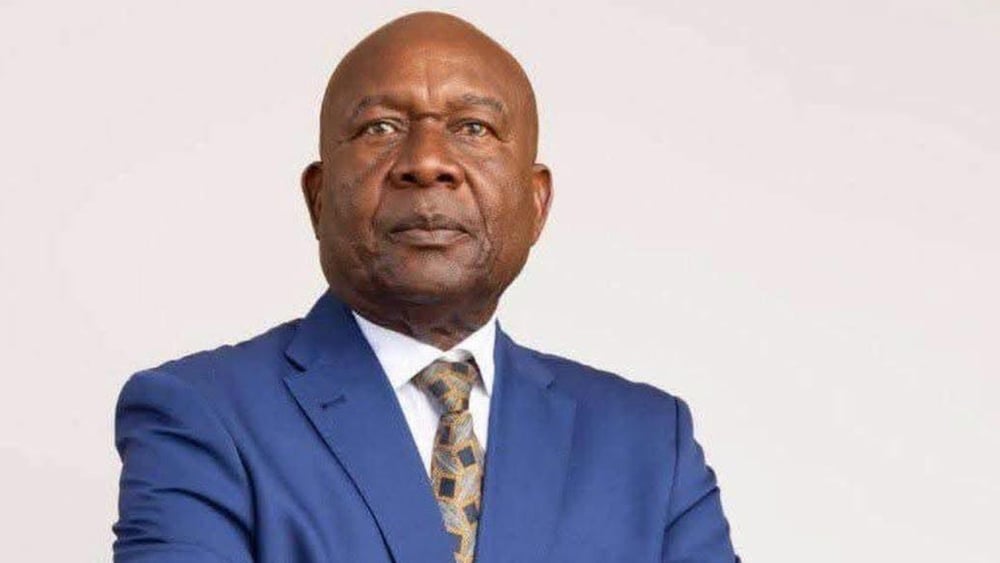
Xavier Chungu est le président du Parti libéral-démocrate et était candidat de l’opposition pour la prochaine élection présidentielle jusqu’à son retrait de la campagne, le 12 juillet 2026, du fait de son placement en détention. Il a été arrêté le 28 mai après avoir participé le 24 mai à un podcast, le Zed Podcast. Selon certaines sources, ce podcast a été supprimé avant d’être rendu public, mais Amnesty International n’a trouvé aucun élément indiquant que les déclarations de Xavier Chungu comportaient des informations classées, représentaient une menace réelle pour la sécurité nationale ou pourraient constituer une quelconque infraction reconnue par le droit international relatif aux droits humains.
La date de son arrestation figurant sur l’acte d’inculpation est le 1er juin 2026, au lieu du 28 mai. Il a été inculpé de sept chefs d’accusation de «communication de certaines informations», au titre de l’article 4-1 de la Loi relative à la sûreté de l’État. Trois chefs de «pratiques séditieuses» ont également été retenus contre lui au titre du Code pénal, ainsi qu’une infraction de «publication interdite ou divulgation d’informations à une personne non autorisée» au titre de la Loi sur les services de renseignement. La Haute Cour de Zambie lui a accordé une libération sous caution le 4 juillet, mais il a été de nouveau arrêté le jour même et inculpé de «communication de certaines informations» au titre de la Loi relative à la sûreté de l’État, de «pratiques séditieuses» au titre du Code pénal et de deux chefs d’accusation de «divulgation d’informations à des personnes non autorisées» au titre de la Loi sur les services de renseignement. Le Directeur de l’action publique a émis un «certificat d’exclusion» empêchant de fait sa libération sous caution, qui a privé la justice de son pouvoir discrétionnaire pour vérifier si son maintien en détention provisoire est justifié par un motif prévu par la loi et s’il est nécessaire et proportionné.
À l’heure actuelle, aucun élément rendu public ne prouve que Xavier Chungu a divulgué des informations dont la publication représenterait une menace réelle et identifiable pour la sécurité nationale. Bien que l’État affirme que le podcast comportait des informations confidentielles acquises dans le cadre de ses anciennes fonctions, le contenu précis qui constituerait une divulgation illégale n’a pas été révélé publiquement. D’après les témoignages indépendants de personnes affirmant avoir écouté l’enregistrement, il ne contenait pas d’informations classées. Le podcast aurait été supprimé avant sa diffusion publique.
Le droit international relatif aux droits humains et les normes connexes concernant le droit à la liberté d’expression protègent la teneur du discours politique, en particulier dans le cadre du débat public (voir l’Observation générale n° 34 du Comité des droits de l’homme des Nations unies, § 38). Dans sa Déclaration de principes sur la liberté d’expression et l’accès à l’information en Afrique, la Commission africaine des droits de l'homme et des peuples a souligné: «La liberté d’expression n’est pas restreinte pour des motifs touchant à l’ordre public ou à la sécurité nationale, sauf lorsqu’il existe des risques réels de porter atteinte à un intérêt légitime et qu’il existe un lien de causalité étroit entre le risque de préjudice et l’expression.»
En détail
| Numéro UA: Date de parution | Actualisé le: Index: |
UA 075/26 24.07.2026 | - AFR 63/1328/2026 |
| Participation prévue jusqu'au: | 24 janvier 2027 |
| Action urgente complète (Word): | français english |
| Modèle de lettre uniquement (Word): | français english |
Étant donné que les situations peuvent changer, veuillez vérifier avant d'envoyer votre lettre si la campagne de lettres est toujours active.
English version
Ex-presidential candidate arbitrarily detained
Xavier Chungu is an opposition political leader and was a presidential candidate until his withdrawal on 12 July. On 28 May, he was arrested following an interview he did in a podcast. He was subsequently charged with seven counts under the State Security Act, three counts of sedition, and one count under the Zambia Security Intelligence Services Act. On 10 July, he was denied bail after the Director of Public Prosecutions issued a «No Bail Certificate» limiting meaningful judicial oversight and undermining the requirement that pretrial detention must have a legal justification and be necessary and proportionate. Amnesty International calls on the Zambian authorities to immediately and unconditionally release Xavier Chungu as the criminal charges against him are based solely on the peaceful exercise of his human rights, including his rights to freedom of expression.
Xavier Chungu is the president of opposition political party, Liberal Democratic Party, and was a presidential candidate in the upcoming elections until his withdrawal on 12 July, stating that his detention had prevented him from campaigning. He was arrested on 28 May after on 24 May he participated in a podcast known as the Zed Podcast. The podcast was reportedly withdrawn before public release, but Amnesty International has not been able to find any evidence that Xavier Chungu’s statements involved disclosing classified information, posed a genuine threat to national security or could constitute a recognizable crime under international human rights law.
The charge sheet reflected that he was arrested on 1 June 2026 instead of 28 May. He was charged with seven counts of communication of certain information under Section 4(1) of the State Security Act. He was also charged with three counts of seditious practices under the Penal Code Act and one count of prohibition of publication or disclosure of information to an unauthorised person under the Zambia Security Intelligence Services Act. The High Court granted him bail on 4 July, only to be re-arrested on the same day and charged with «communication of certain information» under the State Security Act; seditious practices under the Penal Code Act; Two counts of Publication of Information to Unauthorised Persons under the Zambia Security Intelligence Services Act. The Director of Public Prosecutions issued a «No Bail Certificate» effectively preventing his release and removing meaningful judicial discretion to assess whether his continued pretrial detention has a legal justification and is necessary and proportionate.
At present, there is no publicly available evidence demonstrating that Mr. Chungu disclosed information whose publication posed a genuine and identifiable threat to national security. While the State alleges that the podcast contained confidential information acquired through his former office, the specific content alleged to constitute criminal disclosure has not been publicly disclosed. Independent accounts from individuals who claim to have listened to the recording dispute that it contained classified information. The podcast itself was reportedly withdrawn before public
International human rights law and standards on the right to freedom of expression stress the protection of political discourse, particularly in circumstances of public debate (see UN Human Rights Committee, General Comment 34, para. 38). The African Commission on Human and Peoples’ Rights in its Declaration of Principles on Freedom of Expression and Access to Information in Africa has clarified that «[f]reedom of expression shall not be restricted on public order or national security grounds unless there is a real risk of harm to a legitimate interest and there is a close causal link between the risk of harm and the expression».
_
Please take action before 24 January 2027.
You'll find all necessary adddress- and social media information above. English model letter as a Word-file.