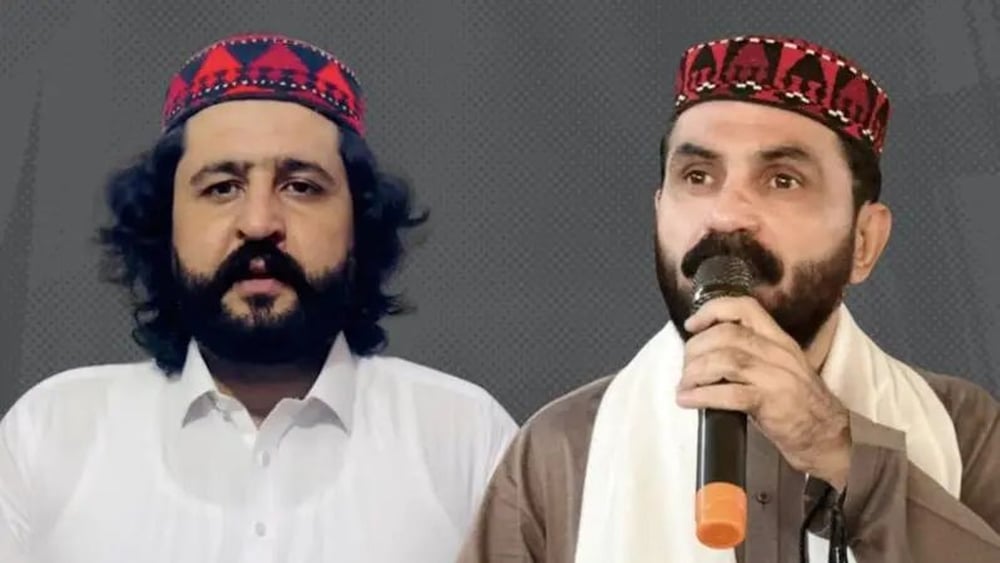
Passer à l'action
Défendez les droits de Jiand Baloch:
Envoyez une lettre d'appel par poste, e-mail ou via X/Twitter.
Tweetez/postez sur les réseaux sociaux pour accroître l'attention sur le cas.
| Agir jusqu'au 31 janvier 2027 |
Modèles de lettre
_
Frais d'envoi par poste :
Europe: CHF 1.90
Autres pays: CHF 2.50
Suisse (copies à l'ambassade): courrier A: CHF 1.20 / courrier B: CHF 1.–
Envois par poste dans le monde: L'envoi de lettres par poste est possible dans presque tous les pays. Néanmoins, le service peut être suspendu temporairement. Nous essayons de mettre à jour les infos. Pour tenir compte des éventuelles limitations en vigueur, veuillez également consulter les infos de la Poste suisse.
_
E-mails:
- Signature: Veuillez ajouter votre nom (ou vos initiales) à la fin du message.
- Modifiez l'objet: si de nombreux courriels portant le même objet arrivent dans la boîte de réception en peu de temps, ils finiront directement dans le «spam»!
Pour éviter cela, nous vous recommandons vivement de modifier ou d'ajuster légèrement l'objet de votre courriel. - Vous pouvez également adapter le message et/ou mettre p.ex. en évidence les revendications et le nom.
- En cas d'échec de l'envoi: remplacez la virgule (,) entre les adresses e-mail par un point-virgule (;) ou n'utilisez qu'une seule adresse par champ.
_
Réseaux sociaux:
Infos, suggestions et adresses sous GUIDE RÉSEAUX SOCIAUX
_
Pour plus d'informations sur la participation aux Actions urgentes, cliquez ici.
Vous pouvez également nous contacter
Partagez la campagne avec vos amis.
Adresses
Premier ministre:
Chief Minister Sarfraz Bugti
Chief Minister Office
Zarghun Road
Quetta, Balochistan
PAKISTAN
E-mail: cm@balochistan.gov.pk ; sarfaraz.bugti@gmail.com
Copies à
Minister of Interior, Syed Mohsin Raza Naqvi
Room #409, 4th Floor, R-Block
Pak Secretariat, Constitution Avenue, Red Zone
Islamabad
PAKISTAN
E-mail: interior.secretary@interior.gov.pk ; info@interior.gov.pk
Ambassade de Pakistan
Bernastrasse 47
3005 Berne
Fax: 031 350 17 99
E-mail: parepbern@gmail.com
Agir sur les réseaux sociaux
Targets:
Chief Minister, Sarfraz Bugti:
X/Twitter (Chief Minister Office): @CMOBalochistan
X/Twitter (Chief Minister): @PakSarfrazbugti
Facebook: https://www.facebook.com/Sarfrazbugtiofficial
Instagram: https://www.instagram.com/sarfrazbugti/
Interior Minister, Mohsin Naqvi
X/Twitter (Interior Minister's Office): @MOIofficialGoP
X/Twitter (Interior Minister): @MohsinnaqviC42
Instagram: https://www.instagram.com/mohsinnaqvicnn
Detained activist Jiand Baloch:
X/Twitter: @ChairmenBSO
Hashtags:
#ReleaseJiandBaloch
#EndEnforcedDisappearances
Suggested messages:
Message 1:
🚨 Urgent Action 🚨
Jiand Baloch has been forcibly disappeared for the third time.
His family has not been informed of his whereabouts.
@CMOBalochistan must urgently disclose where @ChairmenBSO is, ensure his safety, and grant him access to his family and lawyers.
Message 2:
🚨 Urgent Action 🚨
Jiand Baloch, Chair of the Baloch Students Organization, was forcibly disappeared on 24 July in front of his two kids, parents and wife.
His family hasn’t heard from him since that day.
Authorities must immediately:
📍 Reveal his fate and whereabouts
📍 Ensure his safe and immediate release
Message 3:
Jiand Baloch was previously subjected to enforced disappearance in 2018, and again in 2024. Now, he has been taken for a third time.
@CMOBalochistan, his family deserves answers. Disclose his whereabouts NOW.
Message 4:
On 24 July, security personnel raided Jiand Baloch’s home during the night, assaulted family members, and took him.
@CMOBalochistan must immediately:
📍 Reveal his fate and whereabouts
📍 Ensure he is protected from torture and other ill-treatment
Image/graphique à télécharger et à utiliser sur les réseaux sociaux:
1.) Jiand Baloch - Baloch student leader disappared in Pakistan: TAKE ACTION →
2.) Jiand Baloch - Baloch student leader disappared in Pakistan: TAKE ACTION →
Plus d'info
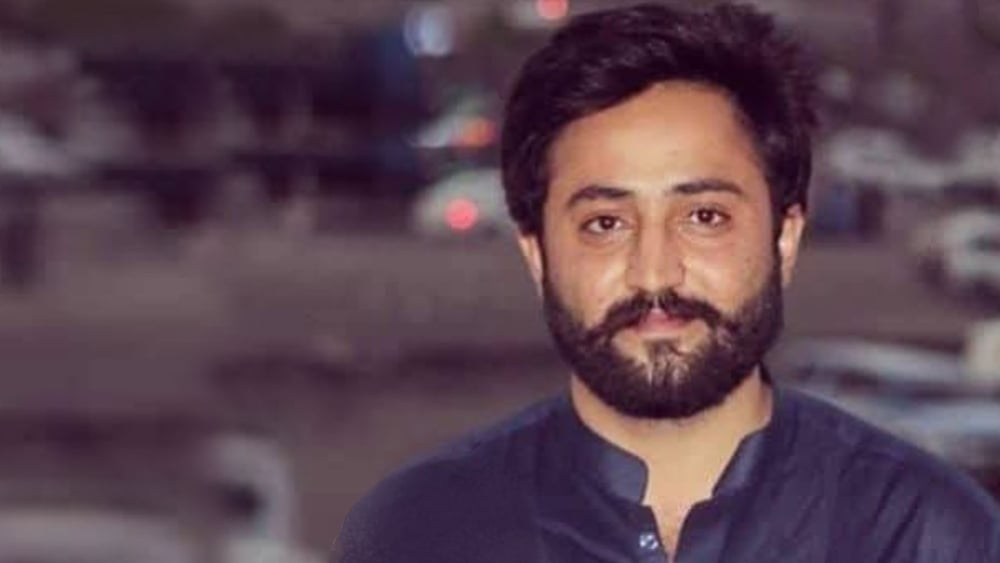
Jiand Baloch est président de l’Organisation des étudiants baloutches (BSO), une organisation étudiante qui fait campagne pour les droits des étudiant·e·s dans la province du Baloutchistan. Il s'est mobilisé sur la question des disparitions forcées au Baloutchistan et travaille en étroite collaboration avec les familles des victimes de disparitions forcées afin de militer pour leur retour. Il a 29 ans et est père de deux enfants, une fillette de deux ans et un fils de trois ans.
Jiand Baloch a été victime d’une disparition forcée à son domicile, à Quetta, dans la province du Baloutchistan, le 24 juillet 2026 à 1 heure du matin. Les forces de l'ordre, accompagnées d'autres personnes, se sont présentées à son domicile vers minuit, alors que Jiand Baloch était absent, mais que ses parents, sa femme et ses deux enfants étaient présents. Selon son épouse, 10 hommes se présentant comme des agents des forces de l'ordre et quatre hommes en civil ont fait irruption de force chez eux. En apprenant que Jiand n'était pas là, ils ont commencé à fouiller la maison, causant des dégâts. D’après la famille, ils ont commencé à agresser physiquement le père de Jiand et menacé d'emmener sa femme et sa mère. Lorsque Jiand est arrivé chez lui, il a de suite été embarqué, au portail de son domicile. Aucun motif n'a été donné pour justifier son arrestation, ni aucune information fournie quant à l'endroit où il était emmené. La police a refusé d’enregistrer un procès-verbal introductif (FIR) concernant sa disparition.
Jiand a déjà été pris pour cible en raison de son militantisme, soumis à des disparitions forcées et inscrit sur une liste de surveillance en lien avec la lutte contre le terrorisme. Il avait été victime de deux disparitions forcées avant cet épisode. La première fois, en novembre 2018, avec son père et son jeune frère; il était rentré au bout de neuf mois, mais son frère, âgé de 15 ans à ce moment-là, avait été inculpé en vertu de la loi antiterroriste de 1997 et se trouve toujours en détention. Puis la deuxième fois en 2024, alors qu’il faisait campagne pour le mouvement Baloch Raji Machi (Rassemblement national baloutche), dans le cadre de la répression visant leur rassemblement. Il avait été libéré un mois plus tard.
L’an dernier, il a été inscrit sur la quatrième annexe de la Loi antiterroriste de 1997, une liste nationale de surveillance regroupant les personnes soupçonnées d'être impliquées dans «le terrorisme, le sectarisme ou d'entretenir des liens avec des organisations proscrites (interdites)». Ce qui a gravement porté atteinte à ses droits de circuler librement et de participer à des manifestations pacifiques et à la vie publique. Sa carte d'identité nationale et son compte bancaire ont été bloqués, et il est tenu de se présenter régulièrement au Département de lutte contre le terrorisme.
Historiquement, au Pakistan, le peuple baloutche est victime de discrimination et de marginalisation, mais la répression à l'encontre des militant·e·s baloutches s'est intensifiée depuis 2025, entraînant des disparitions forcées et des détentions arbitraires dans toute la province du Baloutchistan et au-delà.
- Des dirigeant·e·s du Comité Baloch Yakjehti (BYC), un mouvement populaire pacifique de défense des droits civiques qui milite pour les droits au Baloutchistan, sont soumis à des détentions arbitraires, tandis que d’autres sont la cible de harcèlement de la part de la police.
- Le leader du BYC Mahrang Baloch, a été condamné à la réclusion à perpétuité, ainsi que le membre du mouvement Sibghat Ullah Shah Jee le 22 juin, pour des accusations forgées de toutes pièces les reliant à la mort d’un agent des forces de l’ordre lors du Baloch Raaji Muchi en 2024.
- Les militant·e·s, les avocat·e·s et les journalistes qui dénoncent cette répression sont également pris pour cibles.
- En janvier 2026, les avocat·e·s spécialistes des droits humains Imaan Mazari et Hadi Ali Chattha ont été condamnés à des peines comprises entre 10 et 17 ans d’emprisonnement en raison de publications sur les réseaux sociaux exprimant leur solidarité avec les militant·e·s baloutches.
- En octobre 2025, des dizaines de militant·e·s baloutches, dont des membres du BYC, ont été inscrits sur une «liste de surveillance antiterroriste» au titre de la section 11-EE de la Loi antiterroriste, qui restreint fortement leur droit à la liberté et leur droit de se déplacer.
De très nombreux éléments attestent de cas de disparitions forcées au Pakistan. La Commission d’enquête gouvernementale sur les disparitions forcées a indiqué qu’au mois de novembre 2025, elle avait enquêté sur 10 718 cas à travers tout le pays. L'organisation Defence of Human Rights (DHR) a recensé 3'140 cas depuis 2006, dont 1'362 victimes manquent toujours à l’appel. Elle a recensé 60 cas supplémentaires en 2025. Le Pakistan n’est pas signataire de la Convention internationale pour la protection de toutes les personnes contre les disparitions forcées, et ne dispose d'aucune loi érigeant les disparitions forcées en infraction pénale. Amnesty International a déjà signalé que les familles des personnes disparues sont souvent victimes de harcèlement, de détentions illégales et de surveillance de la part de l’État, en particulier lorsqu'elles s'expriment et agissent en faveur du retour de leurs proches.
En détail
| Numéro UA: Date de parution | Actualisé le: Index: |
UA 079/26 31.07.2026 | - ASA 33/1329/2026 |
| Participation prévue jusqu'au: | 31 janvier 2027 |
| Action urgente complète (Word): | français english |
| Modèle de lettre uniquement (Word): | français english |
Étant donné que les situations peuvent changer, veuillez vérifier avant d'envoyer votre lettre si la campagne de lettres est toujours active.
English version
Baloch activist forcibly disappeared again
Jiand Baloch, activist and chairperson of the Baloch Students Organization, was forcibly disappeared from his home on 24 July 2026. His family members were threatened and assaulted during the raid at his house. His whereabouts remain unknown. This is the third time Jiand has been forcibly disappeared, as part of a pattern targeting him for his peaceful activism. The Pakistani authorities must act promptly to provide information about Jiand Baloch’s fate and whereabouts and ensure his immediate and safe release.
Jiand is the chairperson of the Baloch Students Organization (BSO), a student organization campaigning on the rights of students in Balochistan province. Jiand has been active on the issue of enforced disappearances in Balochistan and works closely with families of the forcibly disappeared to campaign for their return. He is 29 years old and has two children, a two-year-old daughter and a three-year-old son.
Jiand Baloch was forcibly disappeared from his home in Quetta, in Balochistan province, around 1 AM on 24 July 2026. Law enforcement, along with other individuals, arrived at his house at around midnight when Jiand was not present while his parents, wife and two children were present. According to his wife, ten men identifying as law enforcement and four men in plain clothing forcibly entered their home. Upon learning that Jiand was not present, they started to search the house while causing damage to it. The family also reported that the men started to physically assault Jiand’s father and threatened to take his wife and mother. When Jiand arrived home, he was immediately taken from the gate of the house. No reasons were given for taking him nor was any information provided about where he was being taken. The police has refused to register a first information report regarding his disappearance.
Jiand has been targeted for his activism in the past, subjected to enforced disappearances and placed on an anti-terror watch list. He has been forcibly disappeared twice before this incident. In November 2018, he was forcibly disappeared along with his father and younger brother. He returned after nine months, however his brother, 15 years old at the time of the disappearance, was charged with cases under the Anti-Terrorism Act, 1997 and remains detained. Jiand was forcibly disappeared for a second time in 2024 while campaigning for the Baloch Raaji Muchi (Baloch National Gathering) as part of a crackdown on the gathering. He was released a month later.
Last year, Jiand was placed on the Fourth Schedule of the Anti-Terrorism Act, 1997, a national surveillance list of individuals suspected of involvement in «terrorism, sectarianism, or links to proscribed (banned) organizations». This has severely impacted his right to freedom of movement, participation in peaceful protests and public life. His national identity card and bank account have been blocked, and he is required to regularly report to the Counter-Terrorism Department (CTD).
While Baloch people have been historically discriminated against and marginalized in Pakistan, the crackdown on Baloch activists has intensified since 2025, resulting in enforced disappearances and arbitrary detentions across the province of Balochistan and beyond.
- Leaders of the Baloch Yakjehti Committee (BYC), a peaceful grassroots civil rights movement advocating for human rights in Balochistan, have been subjected to arbitrary detention and others are subjected to harassment by the police.
- BYC leader Mahrang Baloch, was sentenced to life imprisonment along with BYC member Sibghat Ullah Shah Jee on 22 June on trumped up charges linking them to the death of a law enforcement official during the Baloch Raaji Muchi in 2024.
- Activists, lawyers and journalists speaking up against this crackdown are also being targeted.
- In January 2026, human rights lawyer, Imaan Mazari and Hadi Ali Chattha were sentenced to 10 to 17 years of imprisonment for social media posts expressing solidarity with Baloch activists. In October 2025, dozens of Baloch activists, including members of BYC, were placed under section 11-EE of the Anti-Terrorism Act, constituting a «terror watch list», severely curtailing the right to liberty and movement of the activists.
Enforced disappearances in Pakistan have been extensively documented. According to the government’s Commission of Inquiry on Enforced Disappearances, as of November 2025, the Commission had investigated 10,718 cases nationwide. The Defence of Human Rights (DHR) has documented 3,140 cases since 2006, of which 1,362 victims remain forcibly disappeared. It documented 60 additional cases in 2025. Pakistan is not a signatory to the International Convention for the Protection of All Persons from Enforced Disappearance and has no law criminalizing enforced disappearances. Amnesty International has previously documented that families of the disappeared are often subjected to harassment, unlawful detention and surveillance by the state, especially if they speak up and campaign for the return of their family members.
_
Please take action before 31 January 2027.
You'll find all necessary adddress- and social media information above. English model letter as a Word-file.